Fighting Windmills or Refusing to Give Up?
Some ideas seem to carry a meaning the moment we hear them.
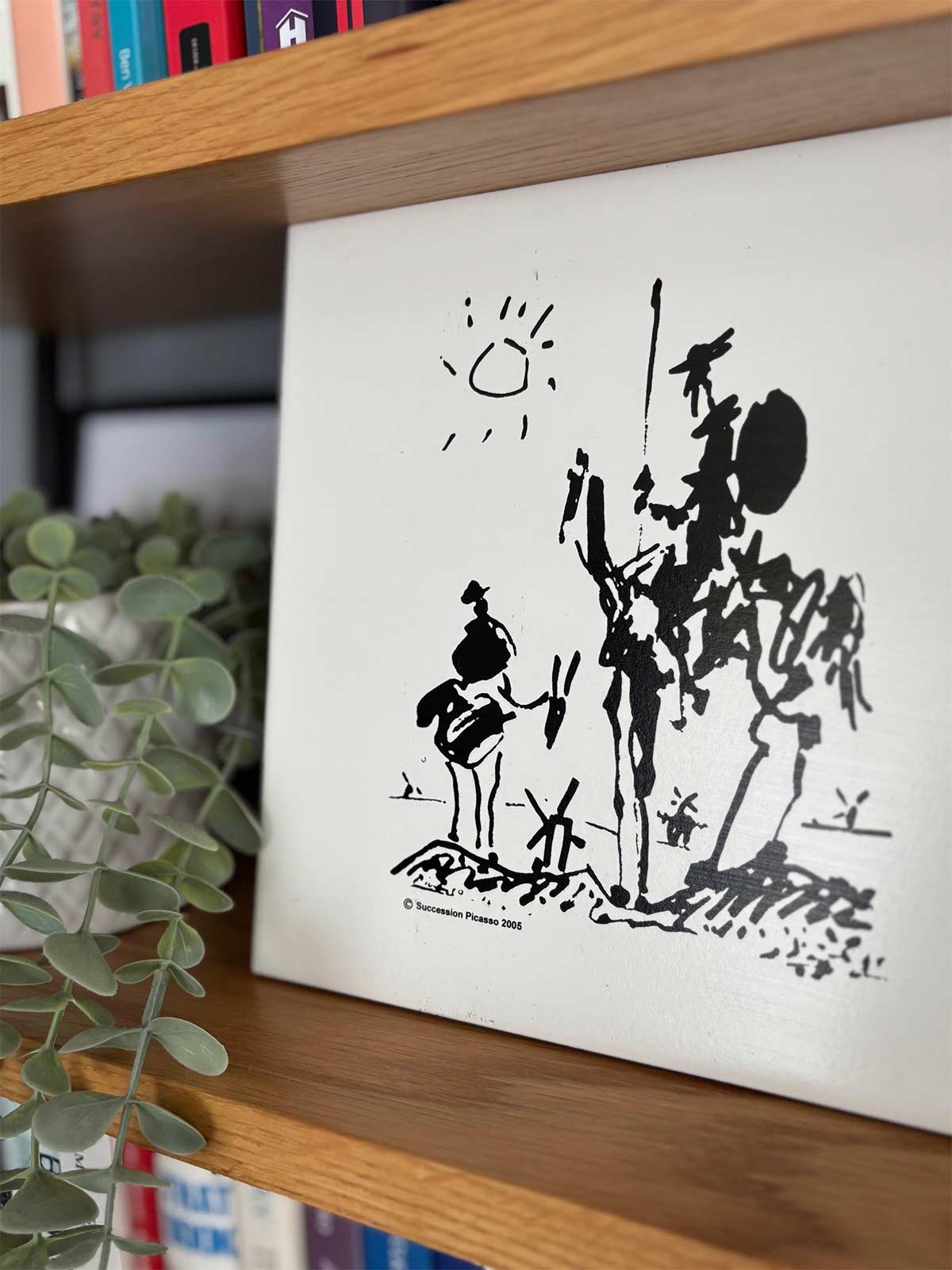
The spirit of Don Quixote is one of them.
For some, it means chasing impossible dreams or fighting battles that cannot be won. For others, it represents refusing to give up and holding on to hope. Depending on how we choose to see it, being “quixotic” can mean very different things.
This month, at Between the Lines, we took Cervantes’ centuries-old hero as our starting point and explored what the Don Quixote spirit might mean today.
As the conversation unfolded, we realised that we were talking about much more than a character in a novel.
A Worthy Battle or a Futile Effort?
One real-life story shared during our conversation caught everyone’s attention.
Years ago, one of our participants discovered that an incorrect entry in their medical records had created a serious problem within the insurance system. What followed was a struggle lasting months — involving hospitals, doctors, IT systems and institutions.
They were facing an enormous system.
At one point, they described feeling “like Don Quixote fighting windmills”.
Yet in the end, their case was upheld, the incorrect records were amended and the battle was won.
Perhaps this is what makes our stories meaningful: the perspective from which we choose to see them.
What one person considers “a futile effort” may be, to another, a necessary and justified struggle that is ultimately worth fighting.
What Is Your Windmill?
In the story many of us have known since childhood, Don Quixote mistakes windmills for giants and charges into battle. Over time, those windmills have become a metaphor in their own right.
So, what might the “windmills” of our adult lives be?
Sometimes bureaucracy.
Sometimes a health challenge.
Sometimes a difficult situation at work or a decision we are struggling to make.
And sometimes, the windmills are the voices within us:
“You can’t.”
“It’s too late.”
“There’s no point trying.”
Maybe It Will
One of the most memorable thoughts in our conversation came from the young niece of one of our participants — young in years, perhaps, but remarkably wise in heart and mind.
“Maybe it will.”
Such a simple sentence, and yet one we use surprisingly little as adults.
As we grow older, we seem to become more familiar with limitations than possibilities. We become very good at explaining why something will not work, why it is unrealistic and why giving up would be the more sensible choice.
Perhaps there is another way to look at Don Quixote’s story.
Maybe his defining quality was not that he was mistaken, but that he kept possibility alive.
Isn’t there something ironic about the modern world? We constantly long for a different life, a different workplace or even a different world — while at the same time becoming increasingly ready to give up on the effort required to create it.
In Pursuit of the Ideal Life
Some of our battles begin with ideals that may be impossible to reach.
The perfect employee.
The perfect parent.
The perfect child.
The perfect leader.
The perfect human being.
We live in a world that continually invites us to be better, achieve more and move closer to some version of perfection.
But what might change if we replaced “more” with “meaning”?
In pursuing the ideals we have created in our minds, perhaps we are also building some of our own windmills.
Every Culture Has Its Own Don Quixote
Another interesting point that emerged from our conversation was how differently Don Quixote is interpreted across cultures.
In some places, he represents innocence, naivety and futile effort. Elsewhere, he is seen as someone who courageously stands by his ideals and refuses to give up.
He can be a misguided knight who creates his own windmills and fails to recognise his limits — or a hero who continues his journey with hope.
Perhaps the choice is ours.
We decide which perspective we bring to our own story and to the life we want to live.
The Don Quixotes of the Modern World
Technology, artificial intelligence, speed, constant connectivity and an ever-changing world of work continue to reshape our lives.
While this new world offers extraordinary possibilities, holding on to human virtues can sometimes require conscious effort.
Perhaps this is why Don Quixote’s story still feels so relevant.
His struggle is not only with the world around him. It is also about the human effort to protect our hope, our values and our belief in what matters.
It is about how much space we continue to make for kindness, compassion and love, despite everything around us.
As the windmills of our modern world continue to change, perhaps listening to the Don Quixotes around us — and within us — who whisper “keep going” or “don’t lose hope” can help us see possibilities we might otherwise miss.
Who knows?
Maybe it will.