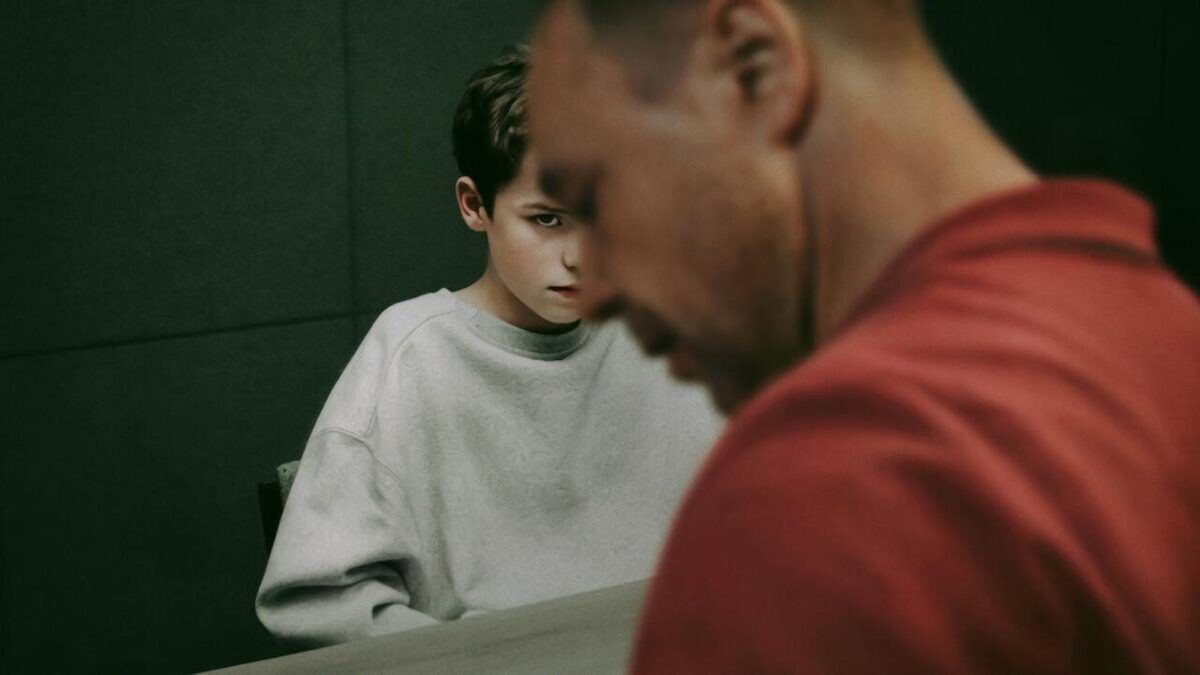
I watched Adolescence the moment it was released, before it became the phenomenon everyone was talking about.
From its opening moments to its final scene, it was utterly captivating… not only because of its subject matter, but also because of its performances, cinematography, storytelling, and overall execution.
Each episode invited reflection. By the time the series ended, I found myself rooted to my seat, replaying scenes and questions in my mind long afterward.
Perhaps my greatest fortune was watching it without seeing the trailer and without reading a single comment or review.
Alongside its striking visual style came the rare magic of encountering a powerful work completely unspoiled, allowing every revelation to arrive as a genuine surprise.
Until the very last moment, my assumptions and expectations were constantly shifting.
And perhaps the most satisfying twist was realizing that the story was not about any of the things I thought it would be.
Afterward, I watched interviews with the cast and creators.
Stephen Graham, whose performance left a profound impression on me, spoke about the origins of the project. He explained that the creative process began after reading a brief crime report buried deep within a newspaper.
As he encountered more and more similar stories, one question kept returning:
“What is happening to our children?”
This is precisely why art can be such a powerful vehicle for expression.
Regardless of culture, beliefs, traditions, social class, or values, there is a something unfolding in cities all over the world.
And it happens precisely when we think everything is fine within our own small corner of life.
At the end of every episode, I felt shaken.
By the finale, I was transfixed.
As with many works that deeply affect me, the series continued to occupy my thoughts long after it was over.
For anyone who cares about humanity, about children, and about the future we are creating together, it is not an easy story to digest.
Because at its core, the series is about the reality we are collectively building, both now and for the generations to come.
And perhaps the discomfort it creates comes from the fact that we can no longer look away.
Collective Breakdown
We could spend hours discussing the series from countless different angles.
There is enough material to create entire spin-offs around many of the secondary characters alone.
The story goes far beyond bullying and the way its effects spread like falling dominoes.
At a deeper level, it is about what happens when we fail to truly see the people closest to us.
When we do not hear them.
When they cannot express themselves.
When they feel misunderstood.
The result is something larger:
A collective breakdown.
We now live in a world where everyone believes they can protect themselves within their own private shelter.
Yet the truth remains that the strength of the whole is only as great as its weakest link.
Beyond individual effort, morality, and good intentions, meaningful change requires determination from those who create and enforce the systems that shape our lives.
The shoulder-check in a crowded marketplace.
The violence in a school corridor.
The social media addiction leading both adults and children into increasingly dangerous digital waters.
Parents who listen to stories of bullying as though they were scenes from a film, as long as the victim is not their own child.
Managers who have perfected the art of workplace bullying.
Stakeholders who choose to look the other way.
Violence packaged and broadcast for ratings.
Voters who fail to recognize these issues as urgent priorities.
And countless other examples.
We need to acknowledge our place within this machinery.
Years ago, we watched dystopian episodes of Black Mirror as speculative fiction.
Many of them have already become reality.
Beginning with Ourselves
As always, change begins with ourselves.
Perhaps it helps to become more aware of what we feel as we move through daily life.
To recognize and question our assumptions.
To clear away as many of our judgments as possible.
To keep our radar open and remain in genuine contact with other human beings.
To speak more openly and more frequently about these issues, even in small conversations among friends.
To show the same patience and willingness to listen to the person sitting beside us that we so readily offer to the answers generated by artificial intelligence.
Perhaps that, too, would make a difference.
What Did We Do Right? What Did We Do Wrong?
One question echoes throughout the series:
“What did we do right, and what did we do wrong?”
It is not merely a question for parents.
It is a question worth asking ourselves in every relationship that shapes our lives.
Many indigenous cultures believed that raising a child was not solely the responsibility of parents, but of the entire tribe.
Unfortunately, that is no longer the reality we live in.
And yet perhaps the responsibility remains.
Each of us can still ask:
How far can our reach extend?
What solutions can our minds imagine?
What is our heart asking of us?
And perhaps most importantly:
Can we hear the voice of the bully that exists within each of us?
And if we can hear it;
How successfully are we in silencing it?