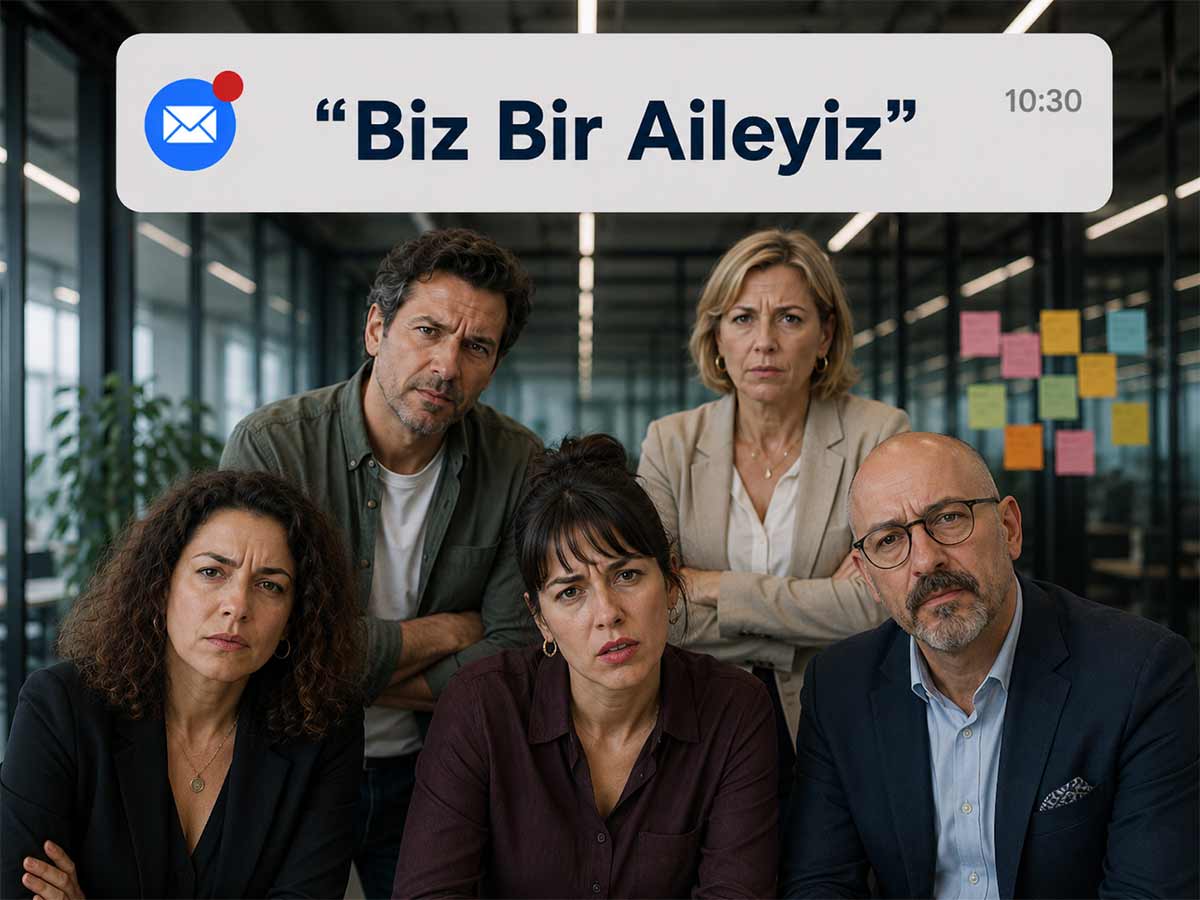
No, we are not a family.
This is a workplace, and we work together to earn a living.
No, management didn’t want it that way.
You wanted it that way.
No, events don’t increase motivation.
A healthy work environment, flexible working arrangements, a genuine career development plan, and fairness increase motivation.
Let’s not try to fool ourselves—or each other.
These are some of the corporate clichés that almost everyone who has spent time in the business world has encountered at least once.
We hear them in team meetings, performance reviews, vision workshops, and employee engagement events.
Some of them trigger knowing glances and eye rolls the moment they are spoken.
Because, more often than not, they have lost their meaning. Yet somehow, they continue to live on.
Let’s take a closer look at some of the most common corporate fairy tales.
“WE ARE A FAMILY”
Perhaps the most popular one on the list.
This phrase is often used to create a sense of belonging, closeness, and solidarity.
The word “family” evokes trust, support, and growing together.
But does it truly feel that way?
Because people don’t remember what was said; they remember what they experienced.
To me, family is a place built on trust, respect, support, and open communication.
People feel a sense of belonging when they are not left alone during difficult times and when they can express themselves freely.
If these elements are missing in an organization, saying “we are a family” does not create belonging.
On the contrary, it empties the phrase of its meaning.
And even if those qualities do exist, should a company really claim to be a family?
Personally, I find it far more authentic when an employee says, “This place feels like family to me,” than when the phrase comes from leadership as a rehearsed corporate slogan.
“EVENTS INCREASE MOTIVATION”
Companies often organize activities to improve employee satisfaction:
Happy hours, concerts, picnics, year-end parties…
When done well, these can create great memories and bring people closer together.
But here’s where the issue begins:
The motivation created by these events is usually short-lived.
After all, how much genuine motivation can we expect from a “Let’s go celebrate!” announcement that comes immediately after a team meeting where people were made to feel undervalued?
Motivation is not built through a few hours of entertainment.
It is built through the daily employee experience.
People want to:
Feel psychologically safe
Feel seen and appreciated
Have opportunities to grow
Be part of a fair system
That is where real motivation begins.
“OUR PEOPLE ARE OUR MOST VALUABLE ASSET”
Another classic corporate statement.
Yes, people are an organization’s most valuable asset.
It is people who give meaning to technology, innovation, and productivity.
But it is difficult for employees to feel valued when they:
Cannot express themselves freely
Are unable to realize their potential
Receive little investment in their development
Constantly struggle with burnout
Valuing people requires much more than simply saying it.
“THAT’S WHAT MANAGEMENT WANTED”
The universal wildcard for difficult decisions.
A change happens.
A decision is made.
Questions arise.
And the response is short:
“That’s what management wanted.”
The discussion ends—or at least people pretend it does.
Yet trustworthy leadership is not just about communicating a decision.
It is about standing behind it.
Why was this decision made?
What was the leader’s thinking process?
How transparently was the team informed?
This is where the real conversation begins.
“NEGATIVE FEEDBACK LOWERS PERFORMANCE”
If feedback is used only as criticism, then yes.
But feedback is also one of the most powerful tools for recognition, growth, and stronger relationships.
People do not only want their shortcomings to be noticed.
They want their contributions to be acknowledged as well.
When employees feel seen, their relationship with feedback changes.
MOVING BEYOND CORPORATE CLICHÉS
Perhaps it is time to replace slogans with sincerity.
Because people are becoming increasingly quick to recognize one thing:
The greater the gap between what is said and what is experienced, the faster trust disappears.
Cultural transformation does not happen because a management book says it should.
It happens through authenticity and consistency.
Together, we have the opportunity to change these corporate fairy tales that have been passed from one generation of professionals to the next.
What is the corporate cliché you hear most often and believe is overdue for change?